
Tooth Extractions in Costa Mesa
Sometimes the healthiest choice for your smile is removing a tooth that can’t be saved — whether from deep decay, an infection, trauma, or crowding. At Brite Clean Smiles in Costa Mesa, we make extractions as calm and comfortable as possible, with local anesthesia, sedation options, and clear aftercare so you know exactly what to expect from the first numbing to a fully healed socket.
When A Tooth Should Come Out
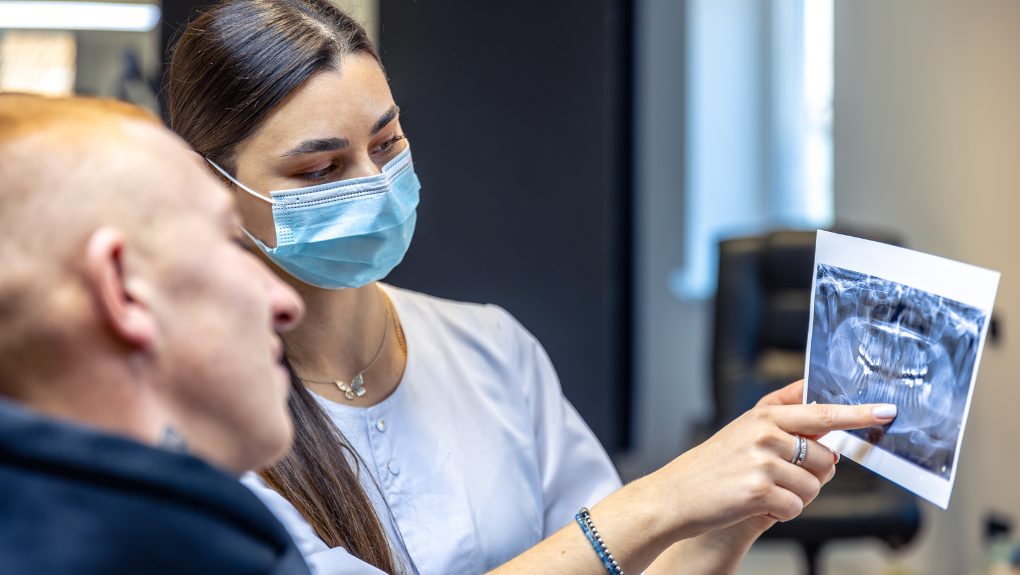
We always try to save a natural tooth first. But when a tooth is too damaged or is putting the rest of your mouth at risk, removing it is often the safest path forward. Every extraction starts with an X-ray so we can see exactly what we’re working with before anything happens.
- Severe decay that has destroyed too much of the tooth to restore with a filling or crown
- Advanced gum disease that has loosened the tooth beyond saving
- A broken or fractured tooth from trauma that can’t be repaired
- Infection or abscess that can’t be resolved with root canal therapy
- Crowding, where a tooth is removed to make room before orthodontic treatment
- Impacted teeth that are stuck below the gum and causing problems
Simple vs. Surgical Extraction
Not every extraction is the same. The tooth’s condition and position decide which approach is right — and we’ll always explain which one you need before we begin.
Simple Extraction
- For a tooth that’s fully erupted and visible above the gum
- The tooth is gently loosened and lifted out with forceps
- Usually takes only minutes under local anesthesia
- Quick recovery, typically just a few days
Surgical Extraction
- For impacted, broken, or hard-to-reach teeth
- A small incision is made; the tooth may be sectioned to remove safely
- Local anesthesia, with sedation options for comfort
- Slightly more swelling and a recovery closer to a full week
In Pain Or Putting Off An Extraction?
The longer a failing tooth waits, the more complicated it usually gets. Reach out and we’ll evaluate it, talk through your options, and get you comfortable.
Contact Us For DetailsWhat Healing Looks Like
Most patients feel significantly better within a few days. Here’s a realistic timeline so you know what’s normal at each stage.
1
The Day Of Your Extraction
Bite gently on gauze for the first 30 to 45 minutes to help a blood clot form in the socket. Use an ice pack on the outside of your cheek to control swelling, rest with your head elevated, and stick to cool, soft foods. Avoid straws, smoking, spitting, and rinsing for the first 24 hours.
2–3
Peak Swelling, Then Relief
Swelling usually peaks around 48 hours and then begins to subside. You can start gentle warm saltwater rinses after the first day to keep the area clean. Keep eating soft foods and stay on top of any pain medication as directed.
3–7
Feeling Like Yourself Again
Most patients feel significantly better within three to seven days and return to their normal routine. You can gradually reintroduce firmer foods as comfort allows, while still avoiding anything hard, crunchy, or seedy directly over the socket.
1–2+
Soft Tissue Closes, Bone Heals
The gum over the socket typically closes within one to two weeks. The bone underneath continues to remodel over the next few months — you won’t feel this happening. If you’re planning to replace the tooth, an implant generally needs several months of healing, while a bridge needs a bit less.
Avoiding Dry Socket
Dry socket happens when the blood clot protecting the extraction site is dislodged or dissolves too early, exposing the bone and nerves underneath. It’s the most common extraction complication — and almost entirely preventable with good aftercare. Pain typically begins or worsens two to three days after the extraction, rather than improving.
Warning Signs
- Intense, throbbing pain that radiates to the ear, temple, or jaw
- Pain that gets worse around day two or three instead of better
- A visible empty socket, sometimes showing grayish-white bone
- A bad taste or persistent bad breath
How To Prevent It
- No straws, smoking, or vaping — the suction dislodges the clot
- No forceful spitting or vigorous rinsing for the first 24 hours
- Avoid alcohol and keep the area gently clean
- If pain worsens after day two, call us right away — it’s easily treated
The First 72 Hours
What you do in the first three days matters most. Following these simple guidelines protects the clot, controls discomfort, and keeps your recovery on track.
Do
- Bite on gauze for 30–45 minutes to form the clot
- Use an ice pack on your cheek the first day
- Rest with your head slightly elevated
- Eat cool, soft foods like yogurt, broth, and smoothies (by spoon)
- Start gentle warm saltwater rinses after day one
- Take any medication exactly as directed
Avoid
- Straws, smoking, and vaping for at least 72 hours
- Forceful spitting or vigorous rinsing
- Alcohol and carbonated drinks
- Hot foods and drinks on the first day
- Crunchy, sharp, or seedy foods near the socket
- Poking the area with your tongue or fingers
Tooth Extraction FAQs
The questions patients ask most before and after having a tooth removed.
How long does swelling last after a tooth extraction?
Some swelling is completely normal and usually peaks around 48 hours after the extraction, then steadily improves from there. An ice pack applied to the outside of your cheek in the first day helps keep it to a minimum. If swelling is still getting worse after three days rather than going down, that’s worth a call to our office.
When can I eat normally after a tooth extraction?
Stick to cool, soft foods for the first 24 hours, then gradually work your way back toward your usual diet around day seven as comfort allows. The main thing is to avoid very hard, crunchy, or sticky foods directly over the extraction site until your dentist gives the all-clear — those can disturb the healing socket.
What are the possible complications of a tooth extraction?
Tooth extraction is a very safe and routine procedure, and most patients have no complications at all. When issues do come up, they’re usually minor — the most common is dry socket, along with temporary jaw soreness. Less commonly, infection or irritation of nearby teeth can occur. Following your aftercare instructions closely is the best way to keep your recovery smooth.
Will a dry socket heal on its own?
It can eventually, but it shouldn’t be ignored because the pain can be significant and healing is delayed. If you suspect a dry socket — throbbing pain that worsens a couple of days after your extraction — call us right away. Treatment is quick and brings relief fast: we gently clean the socket and place a medicated dressing to protect the exposed area while it heals.
Do I need to be put to sleep for an extraction?
Usually not. Both simple and surgical extractions are typically done with local anesthetic, so the area is fully numb and you don’t feel pain during the procedure. For surgical extractions or for patients who feel anxious, we offer sedation options to keep you relaxed and comfortable. We’ll go over what’s right for you beforehand.
Can an emergency room pull a tooth?
Most hospital ERs don’t have a dentist on staff to actually remove a tooth. They can help with antibiotics for an infection and temporary pain relief, but you’ll still need to see a dentist for the extraction itself. If you’re in pain during our office hours, calling us first is usually the fastest route to real relief.
Schedule Your Extraction Consultation
Reach out to our Costa Mesa office and we’ll get you scheduled. We’ll review your X-rays, explain your options, and make sure you’re comfortable every step of the way.
Location
488 E 17th St. Suite A-101
Costa Mesa, CA 92627
Working Hours
Monday: 8am–4pm
Tuesday: 8am–4pm
Wednesday: 8am–4pm
Thursday: 8am–4pm
Friday: 8am–1pm
Gentle Tooth Extractions In Costa Mesa
Whether it’s a painful tooth that needs to come out or a planned removal before other treatment, we’ll guide you through it calmly and clearly — from the first visit to a healed smile.
Book Appointment